The Ultimate YouTube Shorts SEO Checklist for 2026 (Get More Views)
 Mahmudul Hasan
If your YouTube Shorts are consistently stuck in the low-view graveyard, you’re not alone. A staggering 90% of all Shorts get fewer than 1,000 views, leaving creators frustrated and questioning the platform’s unforgiving algorithm. But the system isn’t random; it’s a machine that rewards specific signals. The critical difference between simply posting a Short and strategically optimizing one is the difference between 100 views and 100,000.
What worked last year is already becoming obsolete. In 2026, the algorithm has new features and a sharper focus on user satisfaction signals. This isn’t just another list of generic tips. This is the complete checklist used by channels with millions of views, updated for the latest algorithm changes. By the end, you won’t be guessing anymore; you’ll have a repeatable system to help the algorithm connect your best content with the massive audience it deserves.
How YouTube Shorts SEO Actually Works in 2026
Before diving into the checklist, it’s crucial to understand that Shorts SEO operates differently from long-form video SEO. The core goal is the same—connecting viewers with content they’ll love—but the mechanics are unique to the short-form, swipe-based experience.
Core Concepts
- Suggested Feed vs. Search: While long-form thrives on search, Shorts live and die in the “suggested” feed. Your primary goal is to create content so engaging that YouTube wants to serve it to new audiences, not just rank it for specific keywords.
- Watch Time vs. Swiped Away: For Shorts, the most critical metric isn’t total watch time; it’s the percentage of viewers who watch through versus those who swipe away. A high “viewed vs. swiped away” ratio is the strongest positive signal you can send. If viewers immediately leave, your Short’s reach will be cut short.
- The Algorithm’s Test Phase: When you upload a Short, YouTube pushes it to a small “seed” audience. Its performance in the first hour and first 24 hours determines its fate. If this initial group engages positively (high retention, likes, comments), YouTube expands its distribution. If not, the Short dies.
2026 Algorithm Updates
While YouTube keeps its exact algorithm a secret, public statements and data from top creators reveal key ranking factors for 2026:
- Session Watch Time: The algorithm now prioritizes Shorts that lead viewers to watch more Shorts (either yours or others), increasing the overall user session time on the platform.
- Niche Authority: Channels that consistently post high-quality content on a specific topic are being rewarded with greater authority and more predictable distribution within that niche.
- Engagement Velocity: The speed at which your Short accumulates likes and comments in the first hour is more important than ever.
Key Differences from TikTok SEO
Many creators transitioning from TikTok make critical mistakes. What works on TikTok doesn’t always transfer to YouTube Shorts.
- Descriptive Titles Matter: TikTok’s culture of vague, curiosity-driven captions (“wait for it…”) fails on YouTube, which relies on descriptive titles for categorization and initial audience targeting.
- Hashtag Culture is Different: Overloading with trending hashtags is a TikTok strategy. On YouTube, a few highly relevant hashtags are far more effective.
- Long-Term Value: YouTube values a Short’s “shelf life” more than TikTok. A well-optimized Short can continue getting views from search for months, whereas a TikTok video’s lifespan is typically much shorter.
PRE-UPLOAD Checklist: Setting Your Short Up for Success
Optimization begins long before you hit the “upload” button. This phase is about creating content that is fundamentally designed to perform well within the Shorts ecosystem.
- [ ] Validate Topic Demand: Don’t create in a vacuum. Use YouTube’s search autocomplete to see what users are looking for. Analyze trending Shorts in your niche and see what top competitors are doing successfully. Tools like VidIQ, TubeBuddy, and Google Trends can help you find high-demand, low-competition topics.
- [ ] Hook in the First 1-2 Seconds: You have less than two seconds to stop the scroll. Use a powerful pattern interrupt: a bold text overlay with a question (“Are you making this mistake?”), a surprising visual movement, or an immediate statement of value (“Here’s the one hack you need…”).
- [ ] Optimize for Silent Viewing: Assume the sound is off—because for up to 70% of viewers, it is. Use clear text overlays to convey key points and ensure your visual storytelling is strong enough to be understood without audio. Built-in captions are essential.
- [ ] Hit the Length Sweet Spot: 15-45 Seconds: While you can go up to 60 seconds, data shows that the highest retention rates are often on Shorts under 45 seconds. Longer Shorts have more ad revenue potential, but only if you can hold the viewer’s attention. Match your length to the content type.
- [ ] Use Vertical Format: 9:16 Aspect Ratio: This is non-negotiable. Your Short must be a minimum of 1080×1920 pixels to provide a full-screen mobile experience. Any black bars (letterboxing) will kill your engagement and signal low quality to the algorithm. For more details, check the official YouTube Shorts size guidelines.
- [ ] Design for Loop-ability: The best Shorts have a seamless loop where the end connects back to the beginning. This encourages re-watches, which is a powerful positive signal to the algorithm. Structure your content so a second viewing feels natural and rewarding.
- [ ] Include a Clear Call to Action (CTA): Tell the viewer exactly what to do next. Simple commands like “Follow for Part 2,” “Comment your answer below,” or “Check the description for the full guide” drive engagement signals that the algorithm loves.
UPLOAD Optimization Checklist: Mastering Your Metadata
Once your video is ready, the upload process is your chance to give YouTube all the data it needs to categorize and distribute your content effectively.
Title Optimization
- [ ] Front-Load Keywords: The first 3-5 words of your title are the most important. Think about what a viewer would actually search for. Good: “Easy Meal Prep Hack for Weight Loss.” Bad: “My Awesome New Kitchen Trick You Have to See.” Including numbers or a year can also boost clicks.
- [ ] Keep Titles Under 60 Characters: Anything longer gets cut off on most mobile devices. Prioritize clarity over cleverness. Your title’s job is to communicate the video’s value in a split second.
- [ ] Use Emotional Triggers: Spark curiosity and drive clicks with proven psychological triggers. Use curiosity gaps (“The one thing most people don’t know…”), FOMO (“Don’t miss this before it’s gone…”), or urgency (“Do this now before it’s too late”).
- [ ] Include Year/Timeframe if Relevant: Adding “2026” or “New” to your title signals freshness and relevance, especially for topics that change over time (like software tutorials or marketing trends). For evergreen content, you can skip this.
Description Mastery
- [ ] Make the First Line Critical: Only the first 2-3 sentences of your description are visible without a click. This space must include your main keyword naturally and provide a compelling hook that encourages viewers to tap “see more.”
- [ ] Use Keyword Variations: Naturally include your primary keyword 2-3 times and supplement it with related terms and synonyms. The first 200 characters carry the most SEO weight. Focus on natural language, not stuffing.
- [ ] Add Relevant Hashtags (3-5 Max): This is crucial.
- #Shorts: This is REQUIRED. It helps YouTube’s algorithm properly categorize your video as a Short.
- 1-2 Niche Hashtags: Be specific to your community (e.g.,
#FitnessShorts,#CookingTips). - 1-2 Topic Hashtags: Be specific to the video’s content (e.g.,
#MealPrep,#HomeWorkout).
More than 5 hashtags provide diminishing returns.
- [ ] Include Timestamps for Longer Shorts: If your Short is closer to 60 seconds and covers multiple points, add simple timestamps (e.g., 0:15 – Tip 2). This improves user experience and can help your video appear in search.
- [ ] Add Links Strategically: While links in the description work, a link in a pinned comment often gets a much higher click-through rate. Use this space to link to a related long-form video, a product, or a relevant playlist.
- [ ] Call Out Series/Part Numbers: If your Short is part of a series (e.g., “Part 3 of 5”), state it clearly in the description and link to the previous and next parts. This is a powerful strategy for creating binge-watching sessions.
Thumbnail Optimization (Yes, Shorts Have Them!)
While Shorts autoplay in the feed, they have a thumbnail that appears in search results, on your channel page, and in suggested video sidebars. Optimizing it is a huge missed opportunity for most creators.
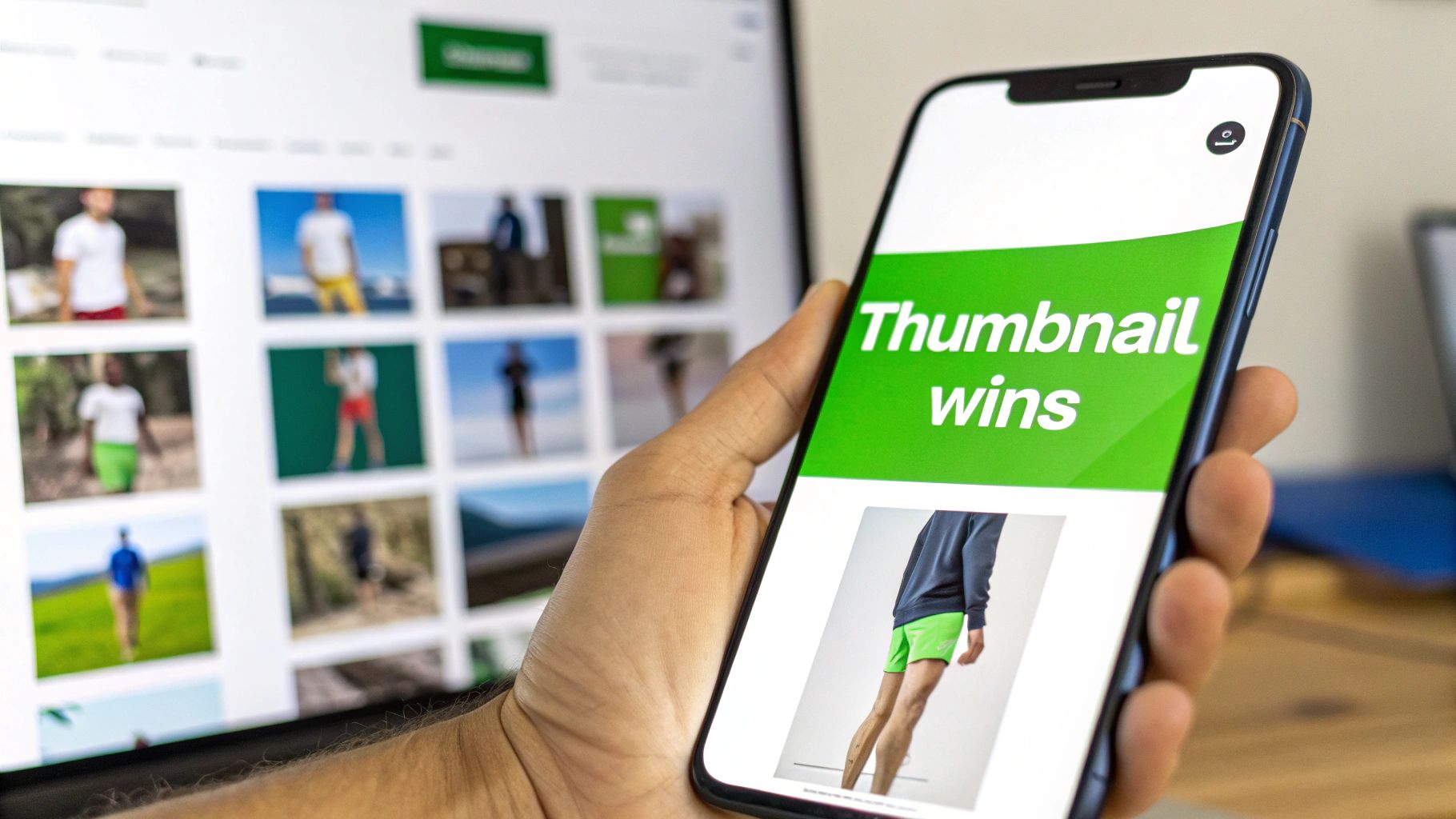
- [ ] Create a Custom Thumbnail: Always upload a custom 1080×1920 thumbnail. Use bright, high-contrast colors, a clear focal point (like a close-up of a face), and large text that is readable even on a tiny mobile screen.
- [ ] Use a Text Overlay on the Thumbnail: Add 3-5 powerful words that complement, but don’t just repeat, the title. This adds extra context and enticement. For example, if the title is “Best Photoshop Trick,” the thumbnail text could be “Mind-Blowing Effect.”
- [ ] Maintain Consistent Branding: Use a consistent color scheme, logo placement, or font across your Shorts thumbnails. This builds brand recognition and makes your content instantly identifiable to your subscribers.
POST-UPLOAD Checklist: Maximizing Reach After Publishing
Your work isn’t done when the video is live. The first 24 hours are critical for signaling to the algorithm that your content is worth promoting.
Immediate Actions (First Hour)
- [ ] Pin an Engaging Comment: As soon as you upload, pin a comment that asks a question to drive engagement. “What should I cover next?” or “Did you know about this?” are great ways to kickstart the conversation and boost engagement velocity.
- [ ] Respond to the First Comments Quickly: The first 10-15 comments are critical. Responding to them immediately shows the algorithm that you are an active creator fostering a community, which is a powerful positive signal.
- [ ] Share to Your Community Tab: If you have over 1,000 subscribers, share your new Short to your Community Tab. This drives initial views from your most loyal audience, giving it a better chance of being picked up by the algorithm.
- [ ] Cross-Promote Strategically: Share your Short to other platforms like Instagram Stories, Twitter, or relevant subreddits (always follow the rules). Frame it with a value proposition, don’t just spam the link.
First 24 Hours
- [ ] Monitor Analytics Closely: Pay close attention to your key metrics. Is your Average View Duration (AVD) over 80%? Where is your traffic coming from (Shorts feed, search, browse)? What is your likes-to-views ratio? Identify what’s working so you can replicate it.
- [ ] Reply to All Comments: Continue to engage with your audience. Replying to as many comments as possible boosts your engagement metrics and strengthens your community.
- [ ] Create Follow-Up Content: If a Short starts to perform well, ride the momentum. Immediately plan and create a “Part 2” or a related video on the same topic. Reference the original in the new video’s description to create a content loop.
Ongoing Optimization
- [ ] Add to Relevant Playlists: Group your Shorts into keyword-optimized playlists by theme or series. This helps with discoverability and increases session time as viewers are more likely to watch multiple videos.
- [ ] Update the Description if Needed: You can edit your description at any time without penalty. Use this to add updated links, fix typos, or include new information that becomes relevant later.
- [ ] Analyze and Iterate: After you’ve published 10-20 Shorts, analyze them as a group. What topics, formats, and title styles consistently perform the best? Double down on what works and either eliminate or improve what doesn’t.
Advanced SEO Tactics for 2026
Once you’ve mastered the fundamentals, these advanced strategies can give you a significant competitive edge.
Keyword Research for Shorts
The process for Shorts is about finding trends and topics, not just search terms.
- Start by typing a niche topic into the YouTube search bar and note the autocomplete suggestions.
- Filter the search results by “Upload date” (last week/month) and sort by “View count.”
- Analyze the titles and topics of the top-performing Shorts. Identify patterns and recurring themes that you can adapt for your own content. Tools like Google Keyword Planner, TubeBuddy, and VidIQ are invaluable here.
The Series Strategy
Creating a multi-part series is one of the most powerful ways to boost channel growth.
- Why it works: It increases session time, builds anticipation, and turns casual viewers into subscribers. The algorithm loves when a user watches multiple videos from the same creator in one session.
- How to execute: Plan the entire series upfront (e.g., “Day 1 of 30 Learning Guitar”). Release episodes on a consistent schedule (daily or every other day) and link them together in descriptions and playlists.
Remix & Repurpose
- From Long-Form to Shorts: Extract the most valuable or entertaining moments from your long-form videos and turn them into Shorts. Use these as “trailers” to drive traffic to the full video by linking to it in the description or pinned comment.
- From Other Platforms: When bringing content from TikTok or Reels to YouTube, don’t just re-upload. Optimize the title, description, and hashtags specifically for YouTube’s algorithm. You can learn more about effective content repurposing strategies on MotionLaps.ai.
The Collaboration Boost
- How it helps SEO: Collaborating with another creator in your niche exposes you to their audience, drives high-quality engagement, and introduces your channel to new keyword opportunities.
- Best practices: Tag your collaborator in the title and description, coordinate your upload timing, and promote each other’s Shorts to both audiences.
Common SEO Mistakes to Avoid
- Using TikTok Titles Verbatim: A title like “Wait for it ?” might work on TikTok, but it fails on YouTube. YouTube needs descriptive titles like “Easy Hair Hack for Amazing Volume” for proper categorization.
- Ignoring the #Shorts Hashtag: This is a critical signal. Always include
#Shortsin your description or title to ensure the algorithm properly identifies your video. - Keyword Stuffing: Unnaturally repeating your keyword multiple times will hurt your ranking. YouTube’s algorithm is smart enough to detect spam. Focus on readability first.
- Inconsistent Posting: The algorithm favors active channels. Publishing sporadically kills your momentum. Aim for a minimum of 3-5 Shorts per week. Batch-create your content with tools like MotionLaps to stay consistent.
- No Clear Niche: Posting random videos about gaming, cooking, and finance confuses the algorithm and prevents you from building a dedicated audience. Stick to 1-3 related topics to build channel authority.
- Ignoring Retention Metrics: Views are a vanity metric if your audience retention is below 50%. A low watch percentage is a major red flag for the algorithm. Diagnose why people are leaving and adjust your pacing, hooks, or length.
- Over-Optimizing for the Algorithm: Remember that the algorithm’s goal is to serve viewers. If your content provides no real value, no amount of SEO will save it. Great content combined with smart SEO is the winning formula.
2026-Specific Updates You Need to Know
The Shorts landscape is constantly evolving. Here’s what’s new and important this year:
- AI-Generated Content Labels: YouTube is rolling out requirements for creators to disclose when their content is made with AI. While the impact on distribution is still being tested, the best practice is transparency. If you use AI tools, consider mentioning it in your description to build trust.
- Shorts Monetization Changes: The revenue sharing model continues to be refined. To maximize your earning potential, focus on creating content that performs well in high-value niches. Longer Shorts (45-60 seconds) that hold attention may have more ad inventory and thus higher revenue.
- Deeper Integration with Long-Form: YouTube is making it easier to connect your Shorts to your long-form content. Use Shorts as powerful trailers or highlights to drive traffic to your longer, more deeply monetizable videos.
- New Analytics Features: YouTube Studio now provides more granular data specifically for Shorts. Prioritize the “Viewed vs. Swiped Away” and “Audience Retention” tabs to get the most actionable insights for your optimization efforts.
The Complete Checklist Summary (Printable Version)
Here is a condensed, bookmarkable version of the entire checklist.
PRE-UPLOAD
- Validate topic demand
- Hook in first 2 seconds
- Optimize for silent viewing
- 15-45 second length
- 9:16 vertical format
- Design for loop-ability
- Include clear CTA
UPLOAD
- Front-load keywords in title
- Title under 60 characters
- Emotional trigger in title
- First description line hooks
- Include #Shorts hashtag
- 3-5 relevant hashtags
- Custom thumbnail
- Text on thumbnail
POST-UPLOAD
- Pin engaging comment
- Respond to comments quickly
- Share to community tab
- Cross-promote strategically
- Monitor first 24hr analytics
- Add to playlist
- Create follow-up if performing well
ONGOING
- Analyze and iterate
- Post 3-5+ times/week
- Build series content
- Collaborate with others
- Repurpose across platforms
- Track what works
- Stay updated on algorithm changes
Conclusion & Next Steps
Mastering YouTube Shorts SEO is a combination of creating great content and understanding the signals the algorithm values. Consistency will always beat perfection, and the key to long-term growth is to test, measure, and optimize. While the algorithm will change, the core principles of providing value and holding attention will remain constant.
Your Action Plan:
- Apply this checklist to your next 5 Shorts.
- Carefully track their performance and compare it to your previous videos.
- Identify what’s working and double down on those strategies.
SEO isn’t about gaming the system—it’s about helping YouTube connect your valuable content with the right viewers. Master these fundamentals, and the algorithm will become your most powerful distribution partner.
Ready to scale your content creation without the burnout? Check out MotionLaps to see how AI can help you batch-create high-quality, algorithm-friendly Shorts in a fraction of the time.