Video Marketing for Small Business: Your Actionable Guide to High-Impact Videos on a Budget
 Mahmudul Hasan
Let's be real: video marketing isn't some luxury reserved for big corporations anymore. For a small business, it’s become a core part of how you grow. It's your chance to forge a genuine connection, show people what makes you special, and compete head-to-head without needing a Hollywood-sized budget. Think of authentic video content as your secret weapon.
Why Video Is Your Secret Weapon for Growth
When you're running a small business, every single marketing dollar counts. I get it. It's easy to look at video as just another line item on the expense sheet, but it’s one of the smartest investments you can make—one that brings back real, measurable results. Video isn't just for brands with massive production teams; it's a tool you can use right now to tell your story in a way text and photos just can't touch.
Imagine a local bakery owner whipping out their phone to film a 30-second Instagram Reel of their daily specials. You see the steam rising from a fresh loaf of bread, the final swirl of icing on a cupcake. That simple, authentic clip can generate a wave of excitement and have them sold out before lunch. Or think of a freelance consultant sharing quick, punchy tips on LinkedIn. They’re not spending a dime on ads, but they’re building incredible trust and positioning themselves as a go-to expert.
Connect on a Human Level
Video literally puts a face and a voice to your brand. That's huge for building trust, especially when people are deciding where to spend their money. It gives you a platform to show your personality, your passion, and your genuine self—all the things that make a small business stand out from a faceless corporation. When customers feel like they know the people behind the business, they're so much more likely to choose you.
Here are a few practical ways video helps you build that connection:
- Behind-the-Scenes Content: A local coffee roaster can film a short video showing the bean roasting process. This isn't just content; it's a story of craft and quality that makes a simple cup of coffee feel special.
- Customer Testimonials: Instead of a written review, a local gym could feature a short video of a member talking about how they achieved their fitness goals. Seeing a real person's success story is incredibly persuasive.
- Founder Stories: A boutique owner can share a one-minute video about why they started their shop, maybe sparked by a passion for sustainable fashion. People connect with purpose, and telling your story helps them buy into your mission.
Reach Customers Where They Are
Let's face it, people are watching videos. All the time. By creating video content, you're simply meeting your audience on the platforms they already love, whether that's TikTok, Instagram, YouTube, or even a professional hub like LinkedIn. The trend is unmistakable.
In 2025, an incredible 89% of businesses worldwide are expected to use video as a central part of their marketing. For small businesses, the numbers are even more compelling: 68% of marketers report that video delivers a better return on investment than Google Ads. You can see more on this in a 2025 video marketing statistics report.
To really understand the potential here, you can even explore a comprehensive guide on TV advertising for small businesses to see how these principles scale.
Building a Video Strategy That Actually Works
Jumping into video marketing without a plan is a classic mistake. It's like driving without a destination—you’ll burn a lot of fuel but won’t get anywhere meaningful. A great video strategy isn't about having a Hollywood budget; it's about having a smart plan that ties your efforts directly to real business outcomes.
It all starts with defining clear, measurable goals.
Forget vague targets like "get more views." Get specific. Are you trying to boost online booking inquiries by 20% this quarter? Or maybe your focus is on increasing engagement on your Instagram profile by 50% to build a more active, loyal community. These concrete goals become your north star, guiding every single video you create.
Know Your Audience and Their Problems
Once your goals are set, it’s time to shift your focus to your audience. I mean, who are they, really? What problems keep them up at night that your business can actually solve? I've seen it a hundred times: video marketing fails when it's all about the business. It has to be about them. Your content needs to address their pain points and questions at every stage of their journey with you.
Think about it. A potential customer who has never even heard of your local coffee shop has completely different needs than a loyal regular who stops by every morning. Your video content has to meet them where they are. This is where you can start mapping different video types to specific stages of their buying journey. For a deeper dive, you can explore a more detailed framework in our guide on creating a video content marketing strategy.
This simple framework shows how video can help you connect with an audience, showcase your value, and ultimately, compete in your market.
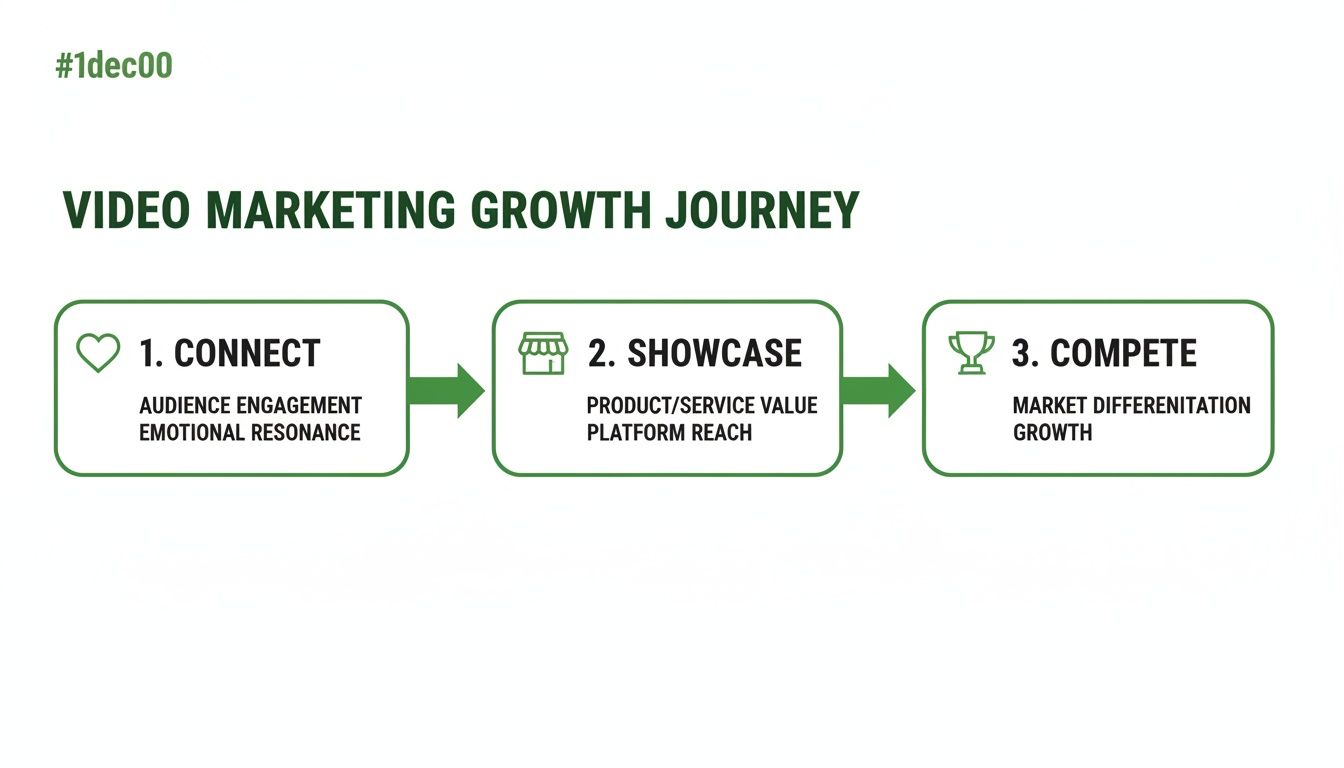
The key takeaway is that video marketing is a progressive journey, not a one-off campaign. Each step builds on the last, helping you create lasting customer relationships and real business growth.
Matching Content to the Customer Journey
To bring this all together, you need to align your video ideas with your business goals and the customer journey. Think of it like a funnel. Short, punchy clips might grab initial attention on social media, while more detailed tutorials or customer stories build the trust needed for someone to actually make a purchase.
A common mistake I see small businesses make is creating only one type of video. A successful strategy uses a mix of content to guide viewers from that first "hello" all the way to a final purchase and beyond.
Here’s a practical way to visualize how this works. This table helps you map specific video types to each stage so you can brainstorm content that will actually move the needle on your specific business objectives.
Matching Video Content to Your Business Goals
| Customer Journey Stage | Business Goal | Recommended Video Type | Example for a Local Coffee Shop |
|---|---|---|---|
| Awareness | Attract New Local Customers | Short, engaging social media videos | An Instagram Reel showing a barista creating beautiful latte art with upbeat, trending music. |
| Consideration | Educate Potential Customers | How-to or explainer videos | A 2-minute YouTube video titled "How to Brew the Perfect Pour-Over Coffee at Home" using your beans. |
| Decision | Convert Followers into Buyers | Customer testimonials or case studies | A short video featuring a regular customer sharing why they choose your shop every single morning. |
| Loyalty | Encourage Repeat Business | Behind-the-scenes content | An exclusive video for email subscribers showing a sneak peek of a new seasonal drink being developed. |
By thinking this way, you ensure every video has a clear purpose. You're not just making content for the sake of it; you're building a system that guides potential customers right to your door.
Creating Professional Videos With Just Your Smartphone
Let's bust a common myth right now: you do not need an expensive production crew or fancy cameras to create great video content for your business. The truth is, the powerful device you carry around in your pocket every day is more than enough to produce polished, impressive videos that truly connect with your audience. The secret isn't a bigger budget; it's a smarter approach to using the tools you already have.
This DIY approach couldn't come at a better time. Short-form videos, which are typically under 60 seconds, are poised to completely dominate in 2025. They pull in an average engagement rate of around 50%, and a whopping 83% of marketers swear by them.
The numbers back this up. Clips under one minute hit 53.9% engagement, and 73% of viewers prefer videos that land somewhere between 30 seconds and two minutes long. These quick, digestible formats are perfect for busy entrepreneurs.
Mastering the Basics: Sound and Light
Want to know what separates amateur-hour footage from professional content? It often comes down to two simple things: audio and lighting.
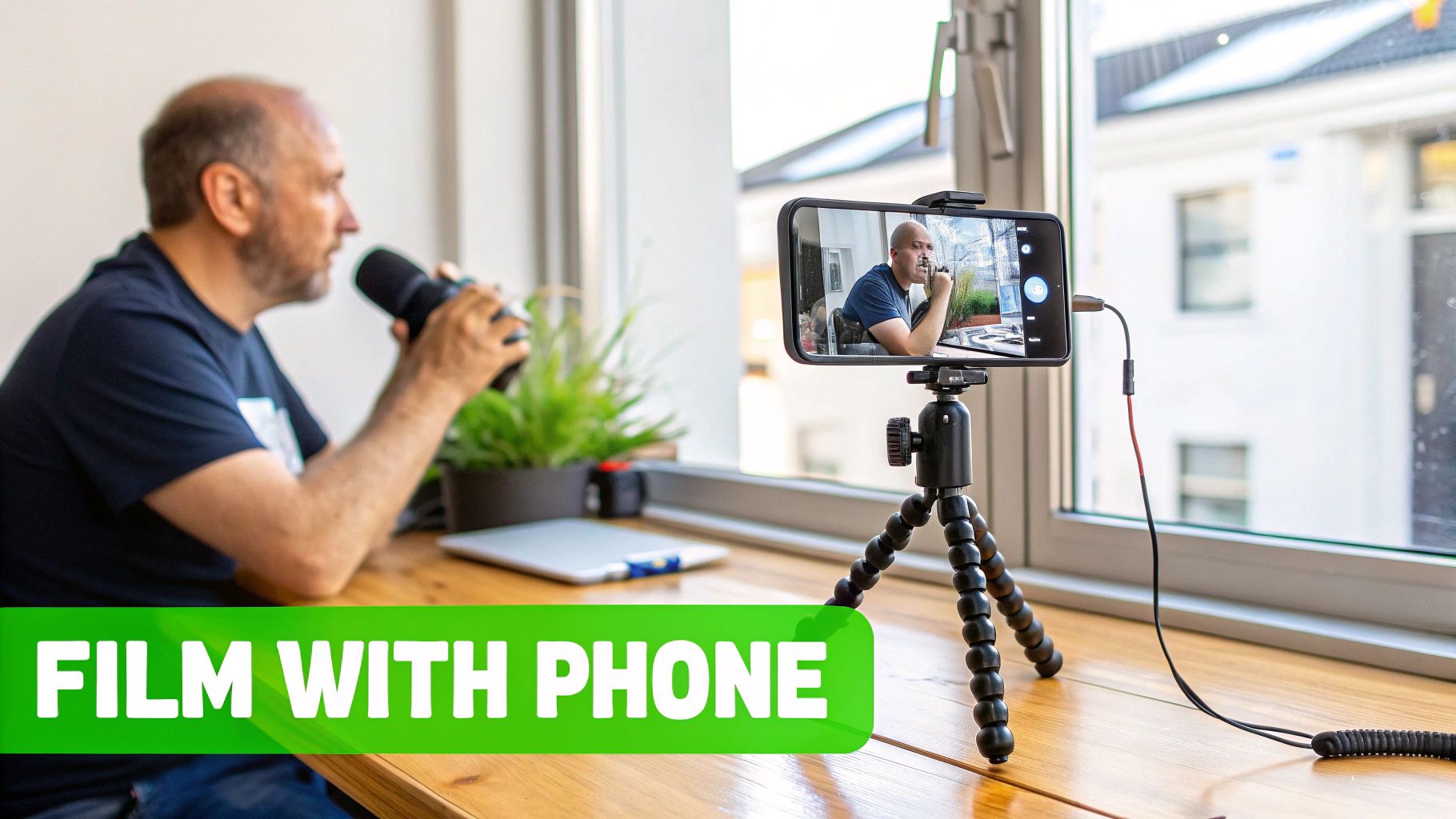
You could shoot in stunning 4K, but if viewers can't hear you clearly, they're gone. Your phone's built-in mic is designed to pick up everything around you, which is why you often get that echoey, distracting background noise. A simple, affordable lavalier mic that clips onto your shirt makes a world of difference. It isolates your voice and delivers that crisp, clean sound that keeps people locked in.
Lighting is just as crucial, but it doesn't require a Hollywood-style setup. Natural light is your best friend here. Just position yourself so you're facing a window. This simple trick provides soft, flattering light that gets rid of harsh shadows and instantly boosts your video’s visual quality.
Your Short-Form Video Starter Kit
While your smartphone is the main event, a few inexpensive accessories can really take your production value to the next level. This minimal kit is all you need to get rolling.
- A Tripod: Nobody likes watching shaky footage. It just looks unprofessional. A basic tripod gives you stability for smooth, steady shots every single time.
- Lavalier Microphone: Like I said, this one is non-negotiable for clear audio. You can find fantastic options online for under $30.
- A Ring Light (Optional): If you're consistently filming in a spot without good natural light, a simple ring light is a great investment for consistent, flattering illumination.
Case Study: A Local Real Estate Agent. An agent can film a compelling property tour using just their iPhone on a tripod. By adding a lavalier mic, their voiceover is crystal-clear, even with ambient noise. They can walk through the house, facing windows for great natural light, creating a professional-looking tour that costs next to nothing to produce. It's that simple.
Planning Your Shot for Maximum Impact
Great smartphone video isn’t just about the gear; it's about the prep work. A solid plan ensures you capture exactly what you need without a bunch of frustrating re-shoots.
Before you even think about hitting that record button, take five minutes to outline your key talking points. This structure not only saves you a ton of time but also leads to a more cohesive and persuasive final video. For some practical frameworks, check out these actionable video script template tips.
This planning is especially critical for short-form content, where every single second has to count. Your outline can be as simple as:
- The Hook: A question or bold statement to grab attention in the first 2 seconds.
- The Value: The core tip or piece of information you want to share.
- The Call-to-Action: Tell them what to do next ("Comment below," "Visit our site").
Getting Your Videos Seen by the Right People
You’ve just created a fantastic video. That’s a huge accomplishment, but it's only half the job. If the right people never see it, all that effort might as well have stayed on your hard drive.
Smart distribution is what turns your content from a simple file into a powerful magnet for customers. This isn't just about hitting "publish" and hoping for the best. It's a thoughtful process of tailoring your approach to each platform's unique audience and algorithm.
A common pitfall I see businesses fall into is treating every social media channel as if it's the same. The strategy that crushes it on YouTube is completely different from what works on TikTok. Each platform has its own unwritten rules and user expectations, and your distribution plan needs to respect that.
Getting this right is absolutely essential for a small business trying to maximize its return on a limited budget and even more limited time.
Platform-Specific Distribution Tactics
Think of each social media platform as a different room at a party. You wouldn't tell a long, detailed story in the middle of the dance floor, and you wouldn't start a dance-off in the quiet library. The same idea applies to your video distribution.
-
YouTube SEO: On YouTube, your video can have an incredibly long shelf life. You should treat it almost like a blog post by optimizing it for search. This means using keyword-rich titles, detailed descriptions, and plenty of relevant tags so people can find your content weeks, months, or even years from now. For example, a local plumber’s video should be titled “How to Fix a Leaky Faucet in 5 Minutes | Your Town Plumber” not “Plumbing Tip #3.” The first one solves a problem people are actively searching for.
-
TikTok and Instagram Reels: These platforms are all about what's happening right now. Success here is about jumping on trends, using popular audio, and hooking viewers within the first two seconds. A local coffee shop could create a quick Reel showing their baristas making a signature drink, all set to a trending song, and use a location tag to attract local viewers. It's fast, engaging, and perfect for that environment.
Your goal isn't just to post a video; it's to start a conversation. Platform-specific tactics ensure you're speaking the right language to get that conversation started.
The Power of Content Repurposing
As a time-strapped entrepreneur, creating brand-new, high-quality content every single day is completely unrealistic. This is where content repurposing becomes your secret weapon.
It’s the art of taking one core piece of content and strategically slicing and dicing it into multiple smaller assets for different channels. This approach saves a ton of time and ensures your key messages reach a much wider audience. You're working smarter, not harder, by squeezing every last drop of value out of each video you produce.
Let's say you record one 10-minute YouTube video explaining "5 Common Mistakes New Homeowners Make." From that single recording, you can easily generate a whole month's worth of content. For a deeper dive into this workflow, check out our guide on content repurposing strategies.
Here’s how that one video could be spun into gold:
- Five Short-Form Clips: Edit each of the five mistakes into its own 60-second clip for TikTok and Instagram Reels.
- A Detailed Blog Post: Transcribe the video and expand on the key points to create an SEO-friendly article for your website.
- Quote Graphics: Pull the most insightful sentences and turn them into eye-catching graphics for Instagram and Facebook posts.
- Email Newsletter Content: Use the main takeaways from the video as the foundation for a valuable, educational newsletter for your subscribers.
When you start repurposing, you're no longer just distributing your video. You're building an entire content ecosystem from a single piece of work.
How to Measure What Truly Matters for Video ROI
You’ve planned, shot, and published your video. That’s a huge win, but the work isn’t over. Now comes the part that separates effective video marketing from just making noise online: connecting your effort to actual, measurable business results. It’s time to look past the flashy numbers and dig into the KPIs that prove your investment is working.

Sure, it feels amazing to see a video get thousands of views, but let’s be honest—views alone don’t pay the bills. The real story is hidden in the data that shows how people truly interacted with your content and, more importantly, what they did after watching.
Going Beyond Views and Likes
Vanity metrics like view counts and likes are tempting to focus on because they’re easy to see, but they can be incredibly misleading. On many platforms, a "view" is counted after just three seconds. That tells you next to nothing about whether your message actually connected with anyone.
To get the real picture, you have to look at the analytics that reveal genuine engagement and intent.
Think about it this way: a high average watch time on a product demo video, combined with a strong click-through rate (CTR) to your product page, is an undeniable signal of positive ROI. That specific data trail proves your content not only held someone's attention but also successfully nudged them toward making a purchase. That’s the kind of concrete evidence that justifies your investment.
The most effective video marketers are ruthless about tracking performance. They understand that a video with 500 views that leads to 10 sales is far more valuable than a "viral" video with 100,000 views and zero conversions.
Finding the Data That Drives Decisions
The good news is you don’t need sophisticated, expensive software to find these metrics. The platforms you’re already using give you this data for free.
- YouTube Studio: Head straight to the "Analytics" tab for any video. Pay close attention to Audience Retention to see the exact moment viewers start dropping off. Then, check the Click-Through Rate on your end screens and cards to see if your calls to action are working.
- Instagram Insights: For Reels, look beyond plays to metrics like Saves and Shares. These actions show that your content was valuable enough for someone to keep for later or recommend to others—a much stronger signal than a passive "like."
The data consistently shows that video works. In fact, research shows 41% of marketers report high returns from their video efforts, with product videos being the top performer for 66% of them. Even more telling, a staggering 89% of viewers say they've been convinced to buy something after watching a brand’s video. You can dig into more of these stats and see how video marketing delivers for businesses at Siege Media.
To make it even clearer, let’s break down which metrics actually matter versus which ones are just noise.
Vanity Metrics vs. Actionable KPIs for Video
It's easy to get distracted by big, impressive-looking numbers. The key is to focus on the metrics that demonstrate real business impact rather than just surface-level engagement. This table breaks down what to watch and what to ignore.
| Metric Type | Example Metric | What It Tells You | Why It's Actionable (or Not) |
|---|---|---|---|
| Vanity Metric | View Count | The number of times your video was played (often for just a few seconds). | Not Actionable: It doesn't indicate if the viewer absorbed your message or was even interested. |
| Actionable KPI | Watch Time / Audience Retention | The average duration people watch your video and where they stop watching. | Actionable: Pinpoints what parts of your video are engaging and which parts are causing viewers to leave. |
| Vanity Metric | Likes | The number of people who clicked the "like" button. | Not Actionable: It's a low-effort form of engagement that rarely correlates with business goals. |
| Actionable KPI | Click-Through Rate (CTR) | The percentage of viewers who clicked on a link in your video or description. | Actionable: Directly measures how effectively your video is driving traffic to your website or landing page. |
| Actionable KPI | Conversions | The number of viewers who completed a desired action (e.g., purchase, sign-up). | Actionable: The ultimate measure of ROI, directly tying your video content to revenue or lead generation. |
By shifting your focus to these truly actionable KPIs, you can start making smarter, data-backed decisions. You’ll be able to fine-tune your strategy over time and confidently prove that your video marketing is a powerful engine for business growth.
Common Video Marketing Questions Answered
Diving into video marketing can feel overwhelming, and it's totally normal to have a few questions before you hit record. Let's tackle some of the most common hurdles I see small business owners face. My goal is to give you clear, practical answers so you can start creating with confidence.
A lot of owners get stuck on where to even find content ideas. The best place to start is right in front of you: your customers.
Think about it—what are the top three questions you get asked every single week? Turn each one into its own short, 60-second video. Right away, you're creating content that is guaranteed to be relevant and valuable to your audience.
Another goldmine is your existing content. Take a look at your most popular blog posts or the newsletters that got the most replies. These are topics you already know resonate. Pull out a key takeaway and turn it into a quick video tip.
How Long Should My Videos Be?
This is probably the number one question I get. The honest answer? It depends entirely on the platform and what you're trying to achieve. There's no single magic number.
- For social media feeds (TikTok, Instagram Reels): Keep it snappy. Aim for 15-60 seconds. Your mission is to grab attention fast and deliver one powerful message before they scroll on.
- For educational content (YouTube, Website): Here you have more breathing room. Videos can be longer, usually in the 2-5 minute range. This gives you enough time to really explain a concept or demo a product without your viewer’s attention wandering off.
The golden rule I always follow is this: be as long as necessary, but as short as possible. Get straight to the point and respect your viewer’s time.
What If I'm Uncomfortable on Camera?
Feeling camera-shy is incredibly common, so you're not alone. The secret is to shift your mindset. You don't have to be perfect; you just have to be helpful. My advice is to start small. Just record short clips on your phone for yourself, with zero pressure to ever post them.
And remember, you don't always have to be the star of the show.
You can create compelling content using screen recordings to demo a process, animated text overlays to share quick tips, or even just your hands to showcase a product. The focus should be on delivering value, not on a flawless on-screen performance.
Before you hit record, try speaking your key points out loud a few times. It helps you sound more natural and confident when the camera is rolling. In the end, authenticity connects way more than slick production. People want to see the real person behind the business.
Ready to create professional videos without the learning curve? MotionLaps uses AI to turn your ideas into viral-ready short-form content in minutes, no editing experience required. Start creating with MotionLaps today.