
how long should a tiktok video be: the definitive guide for views and engagement
 Mahmudul Hasan
So, how long should a TikTok video be? Everyone's looking for that magic number. While a lot of data points to a sweet spot between 21 and 34 seconds for hitting the right balance of engagement and completion, the real answer is… it depends entirely on your content and what you’re trying to achieve.
The New Rules of TikTok Video Length
If you're still stuck on the idea that shorter is always better on TikTok, it’s time to rethink your strategy. The platform has grown up. It's no longer just a place for 15-second dance challenges.
While those quick, catchy clips definitely still work, the algorithm has gotten a lot smarter. Now, it's putting a huge emphasis on one crucial metric: total watch time.
This changes everything. Seriously. Instead of just hopping on trends with super-short clips, creators now have a real reason to make longer, more compelling content. Think about it: a 45-second video that someone watches all the way through tells the algorithm a lot more than a 10-second clip they swipe away from after two seconds.
From 15 Seconds to an Hour
TikTok itself has been pushing this shift. The platform has been steadily increasing its video length limits for years, clearly taking aim at the long-form giants. You can now upload videos up to 60 minutes long from your computer or phone and record up to 10 minutes right in the app. That's a massive jump from the old 60-second cap.
This evolution isn’t just a technical update; it’s a creative opportunity. It unlocks the door for much deeper storytelling, in-depth tutorials, and brand narratives that just weren't possible before. You can discover more about TikTok’s evolving video limits and what they mean for your content strategy.
The question is no longer "How short can I make this?" but rather, "How long can I hold my audience's attention while delivering value?"
Choosing Length Based on Your Goal
Figuring out how to use these different timeframes is the secret to a winning content plan. The best length isn't a one-size-fits-all number. It's a strategic choice that should be tied directly to your goal for that specific video.
To help you get started, here's a quick look at how different lengths can serve different purposes.
TikTok Video Length Quick Reference Guide
This table breaks down the most common video length categories and what they're best used for. Keep it handy when you're planning your next video.
| Video Length | Primary Goal | Best For |
|---|---|---|
| 7-15 Seconds | Virality & Trend Hopping | Quick laughs, trending audio, simple tips, and instantly shareable moments. |
| 21-34 Seconds | High Engagement | Explaining a concept, showing a mini-process, or telling a short story. |
| 45-90 Seconds | Education & Value | Step-by-step tutorials, detailed explanations, and product demonstrations. |
| Over 60 Seconds | Deep Connection | Brand storytelling, interviews, Q&A sessions, and in-depth narratives. |
By matching your video's duration to its purpose, you stop guessing and start using length as a powerful tool for growth. It's all about being intentional.
Decoding How the Algorithm Measures Success
Ever wondered why a 30-second video sometimes blows up while a snappy 10-second clip falls flat? It all comes down to the TikTok algorithm's obsession with one thing: how long people actually watch.
Think of it as a quality score. When someone watches your video from start to finish, it sends a massive signal to the algorithm that your content is genuinely good and worth pushing out to a wider audience.
Getting a handle on this core principle is the secret to making content that the algorithm loves, no matter how long or short it is. Before you can figure out how long a TikTok video should be, you have to understand what the platform counts as a "win."
It's not just about racking up views; it's about keeping eyeballs glued to the screen. The algorithm is constantly weighing a few key metrics to decide if your video is a hit or a miss.
The Two Most Important Metrics
When it comes to video length, the algorithm is really judging your content on two main factors. If you can get these right, you're well on your way to growing your audience.
-
Completion Rate: This is simply the percentage of people who watch your video all the way to the end. A high completion rate is one of the most powerful signals you can send. A 15-second video with a 90% completion rate will almost always beat a 60-second video that only gets a 20% completion rate.
-
Total Watch Time: This is the grand total of all the minutes and seconds people have spent watching your video. This is where longer videos can really shine. They have the potential to accumulate a huge amount of watch time, even with a lower completion rate, which also tells the algorithm your content is valuable.
Here's a simple way to think about it: The algorithm is trying to fill a bucket. A short video with a sky-high completion rate fills it with lots of small, consistent cups of water. A longer, super-engaging video fills it with a firehose, even if some of the water spills. Both can get the job done.
The Watch Time Analogy
Let's break it down with an example. Imagine you post two videos. Video A is 10 seconds long, and Video B is 40 seconds long.
If 100 people watch your 10-second Video A all the way through, you’ve just banked 1,000 seconds of total watch time. That’s a fantastic signal.
Now, let's say 100 people also watch your 40-second Video B, but on average, they only stick around for 25 seconds (that's a 62.5% average watch time). In this case, you've racked up 2,500 seconds of total watch time.
See what happened? Even though Video B didn't have a perfect completion rate, its total watch time absolutely crushed Video A's. This tells the algorithm that your content held people's attention for a seriously long time, making it a prime candidate for the "For You" page.
This constant balancing act between completion rate and total watch time is where you'll find the sweet spot for your video length. For anyone looking to go deeper on this, our guide on how to create viral videos breaks down these mechanics even further.
Matching Video Length to Your Content Goal
Figuring out the "perfect" TikTok video length isn't about chasing a magic number. It's about strategy. A video built to go viral is a completely different beast from one designed to build a loyal community or teach someone a new skill. Thinking about how long a TikTok video should be is like a chef picking the right knife for the job—different goals demand different tools.
When you align your video's duration with its purpose, you dramatically stack the odds in your favor. Let's break down the timeframes that actually work for the most common content goals.
For Virality and Trends: 7–15 Seconds
When you're chasing trends and aiming for maximum reach, speed is your best friend. The 7 to 15-second range is the undisputed king of virality. Why? Because it's perfectly engineered for content that's instantly digestible, highly rewatchable, and ridiculously easy to share.
These super-short videos are built for the modern attention span. They’re ideal for:
- Trending Audio: Nailing a lip-sync or a quick skit that rides a popular sound wave.
- Quick Humor: A single, sharp punchline or a visual gag that gets an instant laugh.
- Simple Tips: One impactful piece of advice that delivers immediate value.
The entire concept—hook, content, and payoff—has to be packed into a tiny, powerful package. There's zero room for fluff. Every single second has to count, pushing viewers to watch it again and hit that share button.
For Education and Tutorials: 45–90 Seconds
If your goal is to actually teach your audience something, you're going to need a little more runway. The 45 to 90-second window is the sweet spot for educational content. It gives you enough time to explain a concept or walk through a process without your audience scrolling away out of boredom.
Think of it as a mini-lesson. You can guide viewers through a few steps, explain the "why" behind an idea, or give a solid product demo. Structure is everything here: kick things off with a hook that frames the problem, use the middle of the video to deliver the solution, and wrap up with a clear takeaway.
The goal isn't just to be watched, but to be understood. This length balances providing real depth with the fast-paced nature of the "For You" page, making it perfect for content that establishes you as an expert.
This is where the algorithm really pays attention to viewer behavior. It's a simple fork in the road.
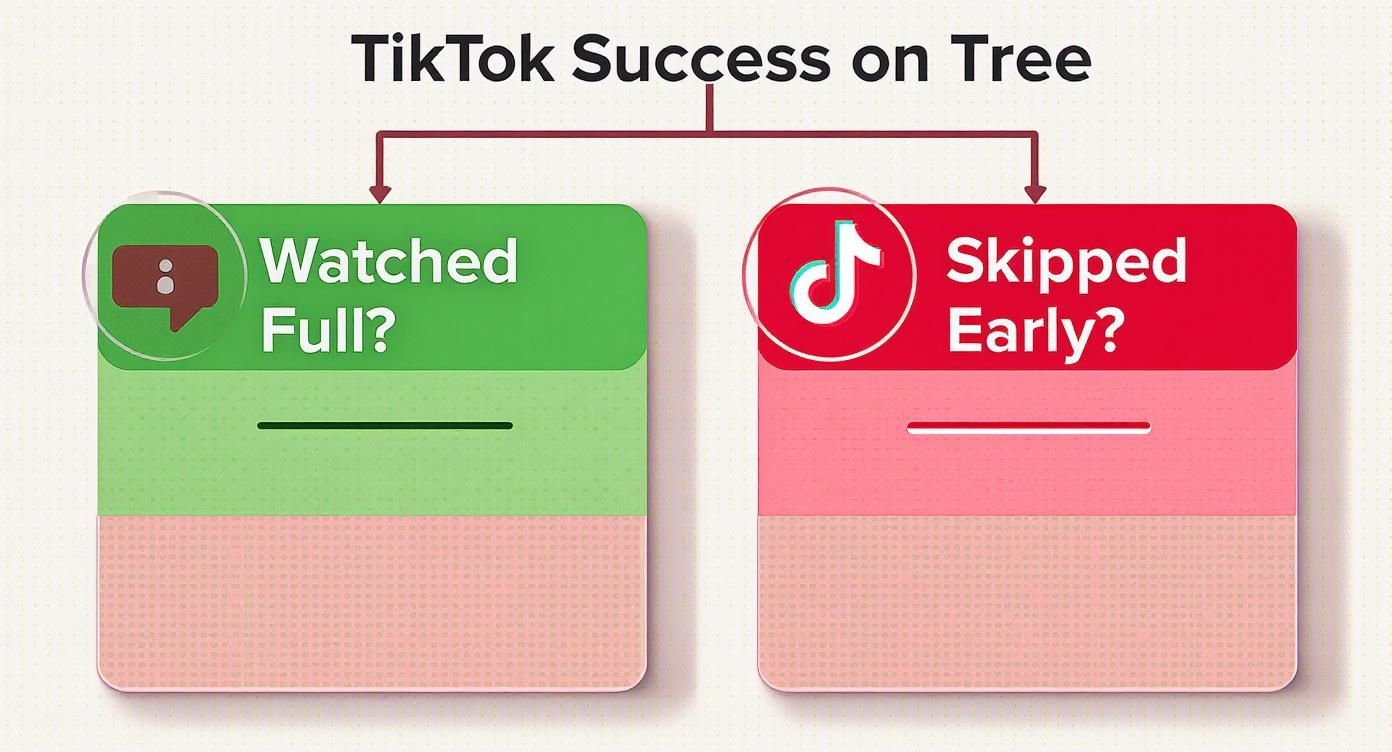
A video watched to completion signals to TikTok that you’ve created something valuable. An early skip does the exact opposite, telling the algorithm your content just didn't connect.
For Storytelling and Brand Building: Over 60 Seconds
To build a genuine connection with your audience, you need enough time to tell a real story. Videos longer than 60 seconds are fantastic for building your brand, sharing behind-the-scenes moments, and creating authentic narratives that hit on an emotional level.
This format lets you move beyond quick tips and show off your brand's personality, values, and mission. Sure, the risk of viewers dropping off is higher, but the reward is a much more loyal and invested community. This isn't just a hunch; the data backs it up. Recent analysis shows videos over one minute are now attracting more than double the views of those under 30 seconds. You can read the full research about social media video statistics to see just how big this trend is becoming.
For Sales and Conversions: 20–45 Seconds
When you need to drive a specific action—a click, a sign-up, a purchase—you have to be clear and urgent. The 20 to 45-second range is tailor-made for conversion-focused content. It's just long enough to present a problem, position your product as the hero, and drop a compelling call-to-action (CTA) without losing the viewer's interest.
This length works because it's direct and respects people's time. You can quickly fire off the key benefits, show your product in action, and create a little FOMO (fear of missing out) to get them to act now. Keep the message sharp, the visuals punchy, and the CTA impossible to ignore.
Finding Your Sweet Spot with Data
While following general best practices is a good start, the real magic happens when you dig into the data. Guesswork can only get you so far. To find what truly works, you need to look at what the numbers are telling you about how video length impacts your reach and engagement. This is how you find your content’s unique sweet spot.
So, what does the research say? Time and again, we see a clear winner emerge. Videos between 21 and 90 seconds tend to hit a performance peak, striking that perfect balance between grabbing attention and racking up serious watch time. It's just long enough to tell a decent story or explain something cool, but short enough that people actually stick around to the end.
But here's the thing: your ideal length isn't set in stone. It actually changes as your account grows and you earn your audience's trust.
Follower Count and Video Length
It's fascinating to see the direct link between an account's follower count and the average length of its videos. When you're new or have a smaller audience, you'll likely find more success with short, snappy content built for quick hits of engagement. Think of it as earning your stripes.
As your account gets bigger, so does your ability to hold people's attention.
Why? It all comes down to trust. Established creators have built a reputation. Their followers are genuinely invested and are far more willing to commit to a longer video because they already know the content will be worth their time. The data backs this up completely.
Recent 2024 statistics show that accounts with fewer than 500 views typically post videos averaging 35 seconds. Jump over to accounts with more than 50,001 followers, and that average climbs to around 55 seconds. This is a crystal-clear sign that bigger, more dedicated audiences can handle—and even prefer—longer videos. Discover more insights about these TikTok video trends.
This trend offers a crucial lesson for creators, no matter what stage you're at.
Actionable Takeaways from the Data
Once you understand these patterns, you can build a much smarter content strategy that evolves right alongside your account. Here’s how you can put these insights into practice:
- If You're Just Starting Out: Stick to the shorter end of that sweet spot. Aim for videos in the 25-45 second range. Your main goal is to hook viewers instantly and deliver value fast. This helps you build that initial following and prove to the algorithm that your content is worth pushing.
- As You Grow Your Audience: Once you've got a loyal community, you’ve earned the right to experiment with longer stuff. Start testing out videos in the 60-90 second range for more in-depth tutorials or storytelling. Keep a close eye on your analytics—they’ll tell you loud and clear if your audience is ready for more.
By constantly testing different lengths and checking your own performance data, you can fine-tune your approach over time. Pair these data-driven insights with a consistent posting schedule, and you’ll be in a great position for growth. For a deeper dive on that, check out our guide on how often to post on TikTok. Combining the right length with the right timing is the one-two punch for making a real impact.
Structuring Your Video for Maximum Retention
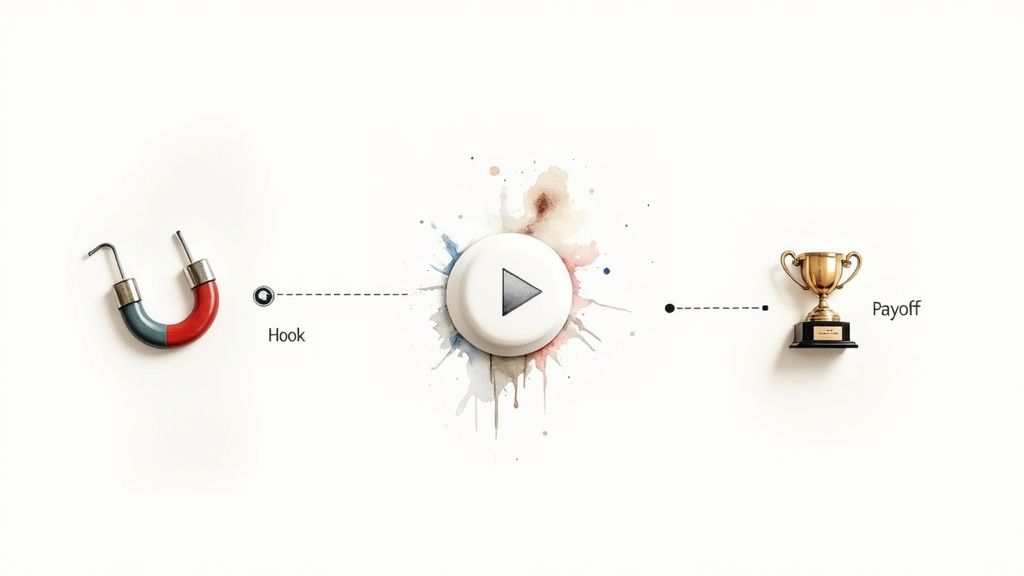
Nailing the perfect length for your TikTok is a great start, but it’s only half the battle. If you can’t keep people watching past the first few seconds, even a 10-second video will flop. The real secret is in how you structure your content to grab attention and refuse to let go.
Think of every killer video as having a beginning, a middle, and an end: the Hook, the Core Content, and the Payoff. This simple framework is your key to boosting the metrics that matter most to the algorithm—retention and completion rates.
The First Three Seconds: The Hook
You’ve got a ridiculously small window—maybe 1 to 3 seconds—to stop the scroll. This opener, your hook, is without a doubt the most important part of your video. Its only job is to spark immediate curiosity or make a promise so compelling that the viewer has to see what happens next.
An effective hook can be anything that breaks the pattern:
- A provocative question: "Are you making this huge mistake with your finances?"
- A bold statement: "You've been cooking steak all wrong."
- A surprising visual: Start with a weird angle or an unexpected action that makes people do a double-take.
If the hook fails, the rest of your video might as well not exist.
The Middle Section: The Core Content
Okay, you’ve got their attention. Now you have to deliver on the promise you just made. The middle of your video is where you give the people what they came for—the tutorial, the story, the big reveal. The main challenge here is keeping the energy up so they don't get bored and swipe away.
Pacing is everything. Use quick cuts, text on screen, and different camera angles to keep things visually interesting. If you're explaining something, break it down into super simple, bite-sized pieces. Every single second should serve a purpose, with zero fluff. You're aiming for a tight, concise delivery that respects your viewer's time. For a deeper dive into these techniques, our guide on how to create short videos has you covered.
The Final Moments: The Payoff and Call-to-Action
The end of your video has to feel like a satisfying conclusion. This is the payoff—the answer to your hook's question, the finished product from your tutorial, or the punchline to your joke. It needs to tie everything together and make the viewer feel like their time was well spent.
A great video doesn't just stop; it concludes. The Payoff should fulfill the promise of the hook, leaving the viewer satisfied and ready for what's next.
Right after that payoff, while the viewer is still engaged, you hit them with a call-to-action (CTA). Don't let that moment of satisfaction go to waste. Tell them exactly what to do next, whether it’s “Follow for more tips,” “Drop a comment with your thoughts,” or “Check the link in my bio.” A clear, direct CTA is how you turn a one-time viewer into a loyal follower.
To make this crystal clear, here are a few examples of how you can tailor your hooks and CTAs to match what you're trying to achieve with your video.
Effective Hooks and CTAs by Video Goal
| Content Goal | Example Hook (First 3 Seconds) | Example CTA (Last 3 Seconds) |
|---|---|---|
| Go Viral (Short Video) | "You won't believe what happened at the end of this…" | "Share this with a friend who needs to see it!" |
| Increase Watch Time (Storytelling) | "This is the story of how I quit my 9-5 with just one idea." | "Follow along for Part 2 tomorrow." |
| Drive Conversions (Product Demo) | "Here are 3 ways our product will save you an hour every day." | "Get yours at the link in our bio! 50% off this week." |
| Educate (Tutorial/How-To) | "Stop scrolling if you want to learn how to edit videos like this." | "Save this for later and let me know if you try it!" |
Think of your video's structure as a conversation. The hook is your opening line, the core content is the main discussion, and the CTA is how you ask for their number—or in this case, their follow or click.
Common Questions About TikTok Video Length
Even with a great strategy, you're going to have questions. It's one thing to know the theory, but it's another to stare at a 3-minute clip in your editor, wondering if you should chop it down. Let's tackle some of the most common questions creators and brands ask about video length.
Does a Long Video Hurt My Account If No One Finishes It?
Yes. Without a doubt. Think of it this way: the TikTok algorithm is all about user satisfaction. If people are constantly swiping away from your 3-minute video after just 20 seconds, you're telling the algorithm, "Hey, this content is boring!"
That low completion rate is a major red flag. It signals that your video didn't deliver on its promise, so TikTok stops showing it to people on the For You page. A sharp, well-edited 60-second video that most people finish is always better than a long, rambling one they abandon. Be ruthless with your edits. If you truly need three minutes to tell your story, that first hook needs to be incredible and the pace has to keep people glued to the screen.
The algorithm doesn't care how long your video could have been; it only cares how long people actually watched it. A low completion rate on a long video is a problem.
Should I Re-Upload an Old Video with a New Length?
Repurposing content is a smart move, especially if you have a short video that blew up. A viral clip is basically proof that you've struck gold with an idea. It resonated with people. So why not give them more of what they want?
For example, maybe a 15-second clip showing a quick "life hack" went viral. That's your cue to create a more detailed 90-second tutorial that walks people through every single step. When you post the longer version, you can even stitch or reply to the original, letting people know you're expanding on it because they loved it so much. Just make sure every extra second is packed with value, not filler.
What Is the Best Way to Test Different Video Lengths?
Stop guessing and start testing. Your analytics hold all the answers you need to figure out how long your TikTok video should be. Wild stabs in the dark won't help you, but a simple, structured test will.
Here’s a framework you can use right away:
- Pick a Topic: Grab a content idea you know usually does pretty well for your account.
- Create Variations: Make a few different versions of the same core video. Try a snappy 25-second cut, a standard 60-second version, and maybe a longer 2-minute deep dive.
- Post and Analyze: Share them at similar times on different days so they don't compete with each other. Wait a few days, then open up your TikTok Analytics.
- Compare Key Metrics: Zero in on two crucial numbers for each video: Average watch time and the percentage of viewers who Watched the full video.
Run this test a couple of times with different topics, and you'll quickly spot trends. The data doesn't lie. It will show you exactly what your audience sticks around for, letting you build a strategy based on cold, hard facts instead of general advice.
Ready to create engaging video content without the hassle? MotionLaps uses AI to turn your ideas into viral-ready videos in minutes, from script to final render. Stop guessing and start creating content that works. Create your first AI video for free at MotionLaps.